

This article was originally published on Popular photography.
Artificial Intelligence (AI) technologies in photography are more pervasive than ever, touching every step of the digital image creation process, from framing to focus to final editing. But they are also widespread in the sense of being spread widelyoften appearing as separate apps or plug-ins that serve specific needs.
It’s starting to change. As AI photo-editing tools begin to converge, isolated tasks are added to larger applications, and in some cases disparate elements merge into new utilities.
It’s great for photographers because it gives us better access to features that used to be more difficult, like managing digital noise. From a developer perspective, this consolidation could encourage customers to stick to a single app or ecosystem instead of playing the game.
Let’s look at some examples of AI integration in popular photo editing apps.
ON1 Photo RAW
ON1 currently embodies this approach with ON1 Photo RAW, its all-in-one photo editing application. The package includes tools that ON1 also sells as separate utilities and plugins, including ON1 NoNoise AI, ON1 Resize AI, and ON1 Portrait AI.
The company recently showed off a trio of new features it’s working on for the next major releases of ON1 Photo RAW and individual apps. Mask AI analyzes a photo and identifies subjects; in the example presented by ON1, the software selected a horse, a person, foliage and natural ground. You can then click on a subject and apply an adjustment, which is hidden only to that individual/object.
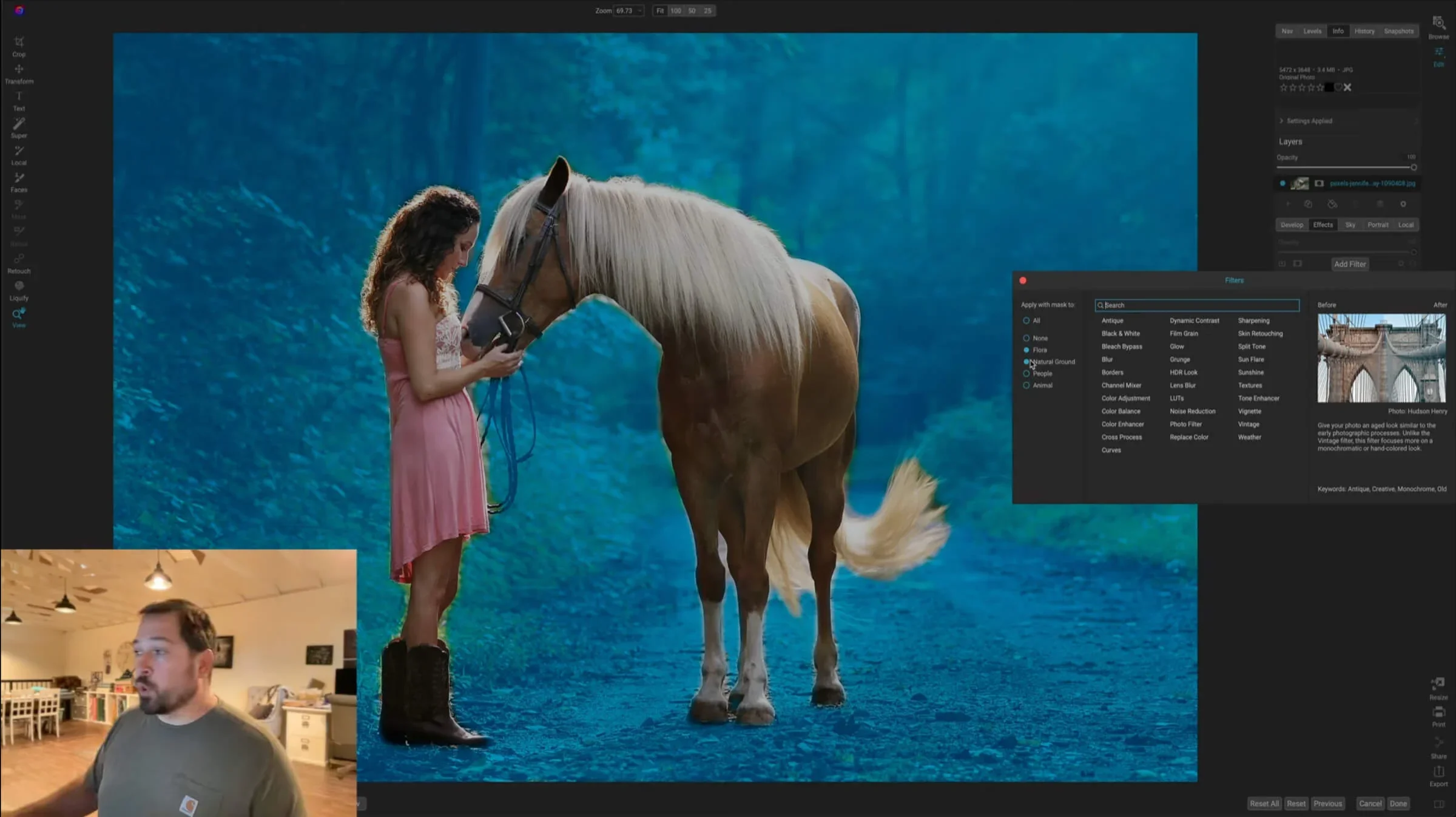
ON1’s Super Select AI function works similarly, while Tack Sharp AI applies intelligent sharpening and optional noise reduction to enhance detail.
AI Photo Topaz
Topaz Labs currently sells its utilities as separate apps (which also work as plug-ins). This is great if you just need to reduce noise, sharpen or enlarge your images. In reality, however, many photographers buy all three utilities in one bundle and then bounce between them when editing. But in what order? Is it better to enlarge an image, then remove the noise and sharpen it, or do the enlargement at the end?
Topaz is currently working on a new application, Photo AI, which consolidates these tools into a single interface. Its autopilot function finds subjects, corrects noise and applies sharpening all in one place, with controls to adjust these settings. The app is currently available in beta for Picture Quality Pack owners with an active Photo Upgrade Plan.

Neo Lighting
Skylum’s Luminar was one of the first products to really embrace AI technologies at its core, albeit with a confusing rollout. Luminar AI was a complete rewrite of Luminar 4 to center it around an AI imaging engine. The following year, Skylum released Luminar Neo, another rewrite of the app with a separate, more expandable AI base.
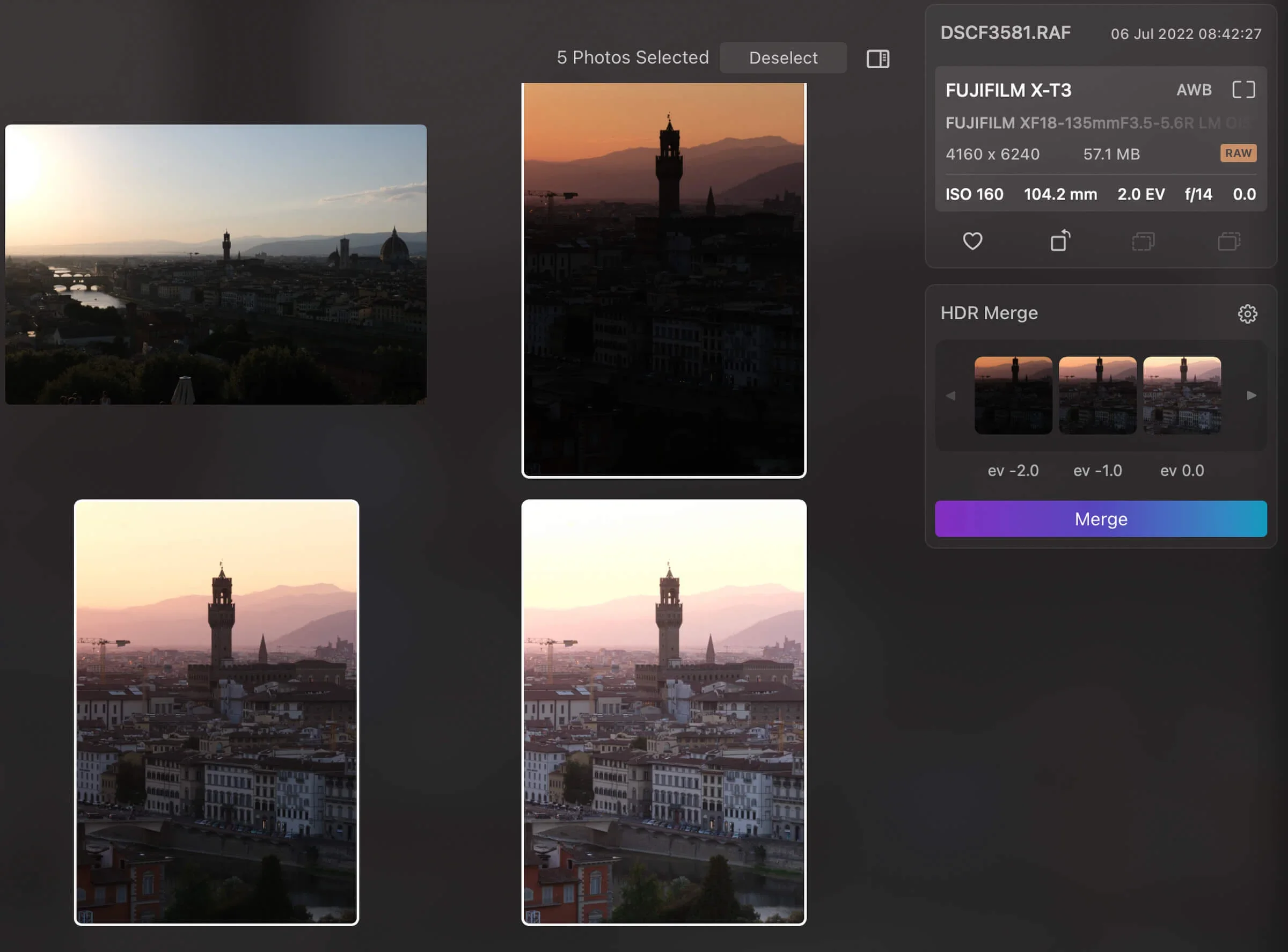
Now Luminar Neo adds extensions, takes tasks that have been split between different apps by other vendors and integrates them as add-ons. Skylum recently released an HDR Merge extension for creating high dynamic range photos from multiple images at different exposures. Noise-free AI will soon be available to deal with digital noise, followed in the coming months by high-end AI for image magnification and AI background removal. In all, Skylum promises to release seven expansions in 2022.
Adobe Lightroom and Lightroom Classic
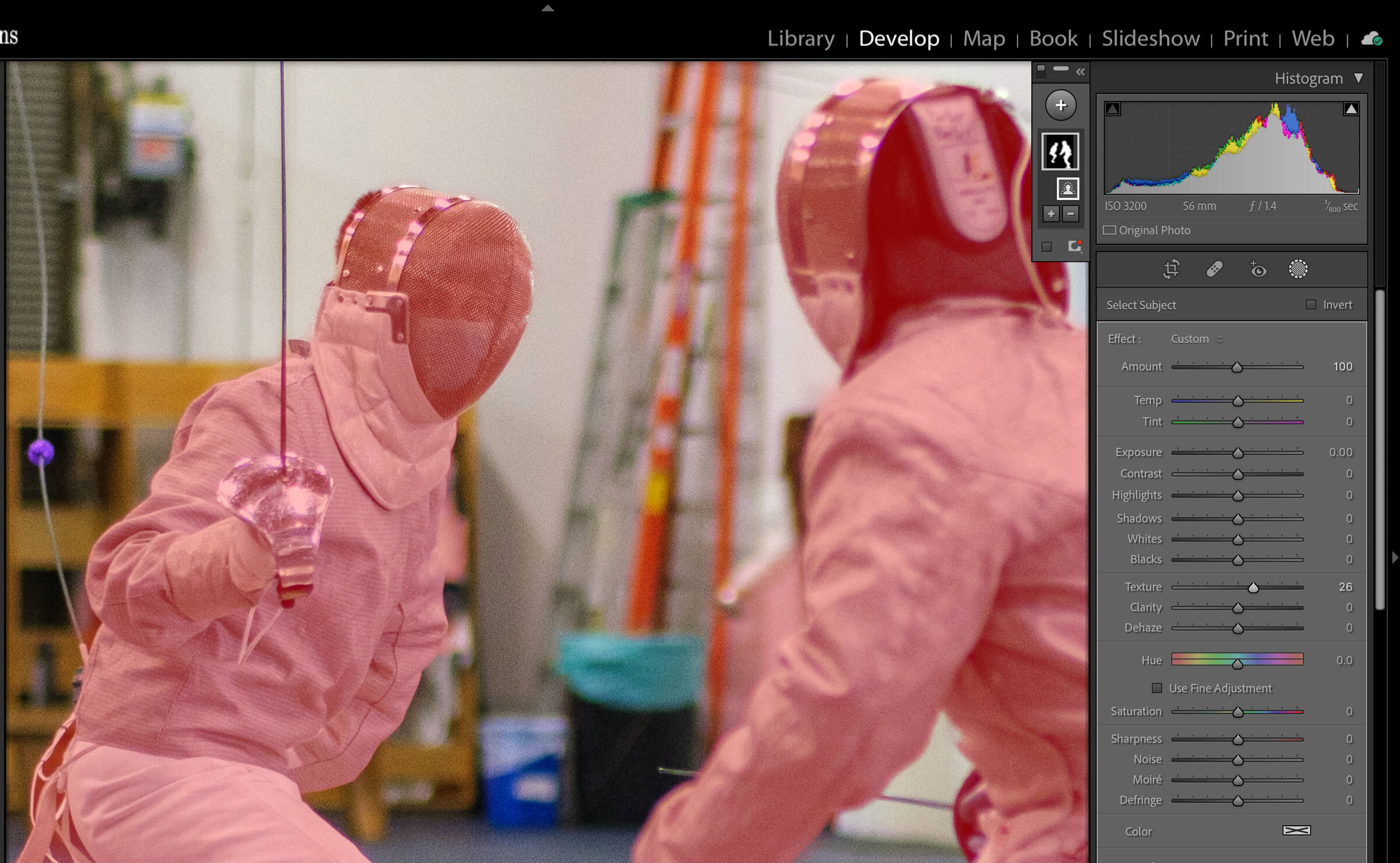
Adobe Lightroom and Lightroom Classic are adding AI tools piecemeal, befitting the platform’s status of being one of the original “great photo apps” (Apple Aperture RIP). The biggest recent AI addition was the revamped masking tool that detects skies and subjects with a single click. This feature is also built into Lightroom’s adaptive presets.
It’s also worth noting that because Lightroom Classic has been one of the big players in photo editing for quite some time, it has the advantage of allowing developers, like the ones mentioned so far, to offer their tools under form of plug-ins. So, for example, if you primarily use Lightroom Classic but need to sharpen beyond the capabilities of the detail tool, you can send your image directly to Topaz Sharpen AI and then retrieve the processed version from your library. . (Lightroom desktop, the cloud-focused version, has no plugin architecture.)
What does the consolidation of AI photo editing tools mean for photographers?
As photo editors, we want the latest and greatest editing tools available, even if we don’t use them all. Adding these AI-enhanced tools to larger apps puts them easily at the fingertips of photographers everywhere. You don’t need to export a build or send it to another utility through a plugin interface. It keeps your focus on the picture.
It also helps build brand loyalty. You may decide to use ON1 Photo RAW instead of tools from other companies because the features you want are all in one place. (Insert one of the above apps into this scenario.) There are different levels though. From the looks of the Topaz Photo AI beta, it’s not trying to replace Lightroom anytime soon. But if you’re a Photo AI owner, you’ll probably be less inclined to check out ON1’s offerings. Etc.
More subscriptions
Then there is the cost. It’s worth noting that companies are starting to offer subscription pricing instead of just one-time purchases. Years ago, Adobe switched to subscriptions, and it’s the only way to get any of their products except Photoshop Elements. Luminar Neo and ON1 Photo RAW offer unique subscription pricing or purchase options. ON1 also sells standalone versions of its Resize AI, NoNoise AI and Portrait AI utilities. Topaz sells its utilities directly, but you can optionally pay to activate a photo upgrade plan that renews every year.
Subscription pricing is great for businesses because it gives them a more stable stream of revenue, and hopefully they are incentivized to keep improving their products to retain those subscribers over time. And subscriptions also encourage customers to stick with what they’re actively paying for.
For example, I subscribe to the Adobe Creative Cloud All Apps plan and use Adobe Audition to edit my podcast audio. I suspect that Apple’s audio editing platform, Logic Pro, would suit me better, due to my preference for editing video in Final Cut Pro over Adobe Premiere Pro, but I’m already paying for Audition. My audio editing needs aren’t sophisticated enough to really explore the limits of each application, so Audition is good enough.
Similarly, subscribing to a large app adds the same kind of general access to tools, including new AI features, if needed. Having to pay $30 to $70 for a targeted tool suddenly seems like a lot (even if it means the tool is there for future images that need it).
The envelope
On the other hand, investing in great apps relies on their continued support and development. If software stagnates or is retired (again, RIP Aperture), you spend time and effort migrating them to another platform or pulling them and their changes.
Right now, the tools are still available in multiple ways, from single-tasking apps to plug-ins. But the convergence of AI is also happening rapidly.


